The hum of the milling unit, the focused laser of the scanner, the rhythmic layers of the 3D printer – these are the symphonies of the modern dental laboratory. We, as dental technicians, have embraced the digital revolution with open arms, marveling at the precision, speed, and material versatility offered by CAD/CAM systems. A 2-in-1 wet and dry milling machine, a high-resolution resin 3D printer, a sophisticated benchtop scanner – these are no longer luxuries but foundational pillars of a competitive lab.
Yet, amidst this dazzling array of technology, I propose a thought experiment, a logical and philosophical inquiry into the necessity of a seemingly archaic piece of equipment: the agar duplicating unit. While it may appear counterintuitive, I contend that in a truly optimized modern laboratory, the agar duplicator is not merely useful, but in fact, a must-have.
This isn’t an argument against digital. Far from it. This is an argument for completeness, for understanding the subtle nuances where a traditional method, when strategically applied, can yield superior results – not just equivalent, but better.
Let’s dissect this with a few illuminating case examples, proving that digital is powerful, but not omnipotent:
Case 1: The Complex RPD Framework with Intricate Undercuts and Tissue Support
Consider a highly complex removable partial denture (RPD) framework. Modern CAD/CAM software can design these with incredible precision, and selective laser melting (SLM) can fabricate them. However, the success of an RPD hinges not just on the framework’s fit to the teeth, but also on its intimate relationship with the soft tissue – the edentulous ridges and the subtle contours of the palate or lingual tissues.
- The Digital Challenge: While digital scans capture the hard tissue precisely, replicating the functional impression of the soft tissue, especially under varying loads, and transferring that into a perfectly adapted milled or printed framework, remains a hurdle. Often, adjustments are needed post-fabrication to ensure optimal tissue support and prevent rocking. The digital file is a static representation; the mouth is dynamic.
- The Agar Advantage: When fabricating an RPD using the lost-wax technique, the ability to duplicate a master cast that perfectly captures the border molding and functional impression of the soft tissue is paramount. Imagine a situation where the dentist has achieved an exemplary border-molded impression, leading to a pristine master cast. To wax up the framework directly on this irreplaceable master is risky. If the wax pattern needs to be lifted, adjusted, or even if a slight error occurs during spruing or investing, the master cast could be compromised.This is where the agar duplicator shines. We can create an exact working refractory model from the master cast using agar. This refractory model becomes our canvas for the lost-wax technique. The technician can meticulously wax the framework, achieving ideal contours, clasp retention, and tissue adaptation with the tactile feedback that CAD software, despite its advancements, still struggles to fully replicate for such nuanced designs. This waxed pattern, honed through years of manual skill, is then invested and cast. The final fit to the original master cast (and thus to the patient) is often superior because the initial functional impression and the subsequent manual adaptation were preserved and leveraged.
Case 2: The Art of the Diagnostic Wax-Up for Anterior Esthetics
A diagnostic wax-up is the blueprint for success in anterior esthetic cases. While digital wax-ups and 3D printed models are invaluable for communication and planning, there are instances where the nuanced, artistic touch of hand-waxing on a physical model offers an unparalleled advantage.
- The Digital Challenge: Digital wax-ups, while excellent for showing form and proportion, can sometimes lack the subtle, organic translucency and depth that a skilled hand-waxer can achieve, especially when considering light interaction and how the final restoration will integrate. Furthermore, for complex bite registrations or interocclusal space management, a physical wax-up allows for direct manipulation and articulation that can reveal issues a purely digital model might obscure.
- The Agar Advantage: After a comprehensive diagnostic wax-up is completed (either manually or even started digitally and then refined manually on a printed model), we often need to duplicate this for various purposes: creating a silcone key for provisional fabrication, or for a backup. If the initial wax-up was performed directly on the master cast to ensure precise margin adaptation and occlusal harmony, an agar duplication allows us to transfer this exact morphology to multiple working models. We can then use these duplicated models for further manual refinement, creating a prep guide, or for the direct fabrication of provisional restorations using traditional techniques. This ensures that the artistry and precision achieved in the initial wax-up are preserved and flawlessly translated into subsequent stages.
Case 3: Salvaging a Critical Die or Model During a CAD/CAM Workflow Breakdown
Imagine a scenario where a critical die or model, perhaps from a challenging impression, has been prepared for scanning. Due to unforeseen circumstances – a software glitch, scanner calibration issue, or even a power surge – the digital capture is compromised, or the resulting file is corrupted. The impression is already poured, and perhaps the patient cannot return for a re-impression easily.
- The Digital Challenge: Without a successful scan, the CAD/CAM workflow grinds to a halt. Re-impressioning the patient is often the only digital solution, causing significant delays and inconvenience.
- The Agar Advantage: If the lab has the foresight to duplicate the original master model/die using agar before attempting the digital workflow, they have an immediate backup. This duplicated model can then be used to restart the scanning process without recalling the patient. Furthermore, if the digital issue persists, having an agar-duplicated backup allows the lab to pivot to a traditional lost-wax casting technique, ensuring the restoration can still be fabricated and delivered on time. This isn’t about replacing digital, but about providing a robust contingency and ensuring continuity of care.
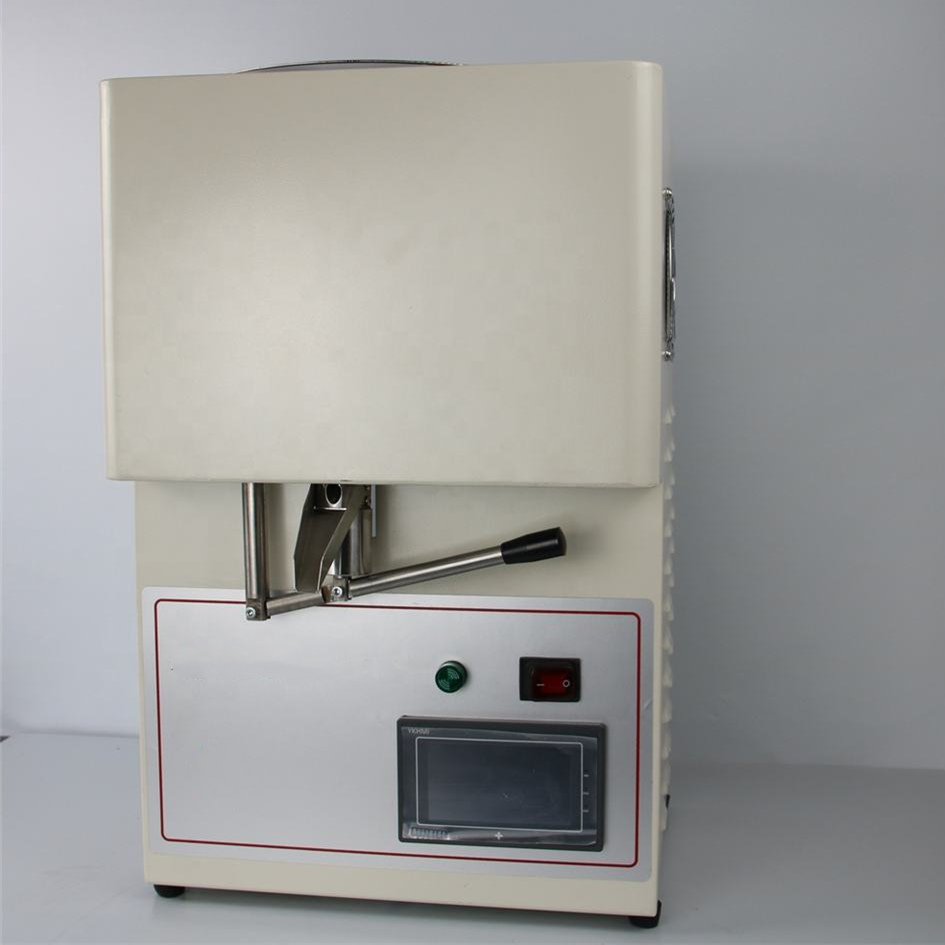
For laboratories or dental office, looking for this automatical agar dental duplicating machine, explor details from Dental Lab Shop.
The Logical Conclusion: Depicting an Integrated Future
These examples highlight a critical truth: while CAD/CAM offers unparalleled advantages in many areas, the lost-wax casting technique, when executed with skill on a precisely duplicated model, often provides a superior level of custom adaptation and tactile control, particularly in complex removable prosthodontics, intricate esthetic wax-ups, and as a crucial fail-safe.
The argument is not for “traditional versus digital,” but for “digital enhanced by traditional.” The agar duplicating unit, often viewed as a relic, is in fact a vital bridge. It allows us to capture and precisely replicate the physical reality of a master cast – a reality that, in certain demanding cases, still offers a more reliable foundation for the nuances of human touch and traditional craftsmanship.
Therefore, for a truly comprehensive, resilient, and ultimately superior modern dental laboratory, the agar duplicating unit is not a sentimental piece of equipment, but a strategic investment. It’s the logical complement that ensures we are equipped for every eventuality, every patient, and every challenge, providing the best possible results by harnessing the strengths of both past and present innovation.

 Happy with health care
Leave a comment