CAD/CAM Materials vs.PFM Fabrication in Dental Labs:Complementary Prosthetic Methods in Modern Prosthodontics
In the ever-evolving field of prosthodontics,dental professionals are constantly seeking the most efficient and precise methods to deliver high-quality restorations.Two prominent techniques that have gained significant traction in modern dental labs are CAD/CAM(Computer-Aided Design/Computer-Aided Manufacturing)materials and PFM(Porcelain Fused to Metal)fabrication.While both methods have their unique advantages,they often serve as complementary approaches in contemporary dental practice.This blog explores how dental technicians and dentists navigate these two methods to achieve optimal outcomes for their patients.
The CAD/CAM Revolution
CAD/CAM technology has transformed the dental lab landscape by introducing a digital workflow that enhances precision and efficiency.The process begins with the dentist capturing a digital impression using an intraoral scanner.This state-of-the-art device eliminates the need for traditional physical impressions,which can be uncomfortable for patients and prone to inaccuracies.Instead,the intraoral scanner captures highly detailed 3D images of the patient’s teeth and gums,providing a comprehensive and precise digital model.
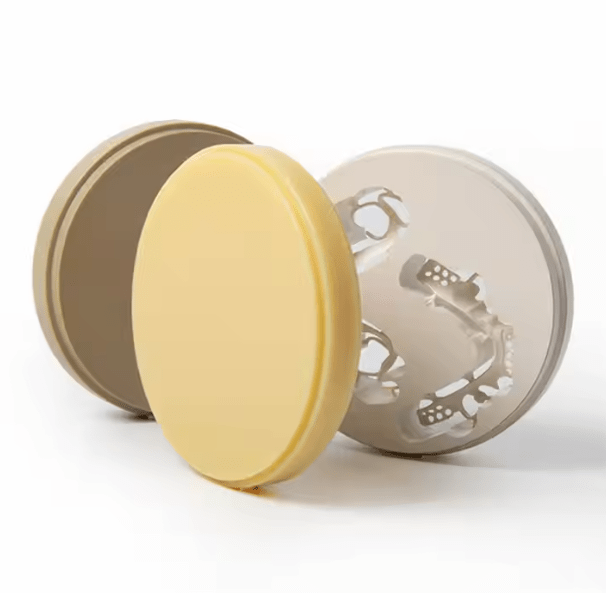
Once the digital impression is sent to the dental lab,the technicians can use CAD software to design the restoration.This software allows them to visualize the restoration from multiple angles,ensuring a perfect fit and aesthetic match.The design is then sent to a milling machine,which fabricates the restoration using CAD/CAM materials such as zirconia,PMMA(polymethyl methacrylate),Peek(polyether ether ketone),titanium,or wax blocks.These materials are chosen based on their biocompatibility,strength,and aesthetic properties. For dentists and dental technicians looking for the extensive dental cad/cam materials optios, take this reference about the dental cad/cam material thourgh Dental Laboratiro.
The beauty of CAD/CAM lies in its ability to streamline the workflow.The digital process reduces human error,speeds up production time,and allows for greater customization.Additionally,CAD/CAM materials offer a wide range of options,enabling technicians to select the most suitable material for each case.For instance,zirconia is ideal for its strength and translucency,making it a popular choice for crowns and bridges.PMMA and Peek are known for their durability and biocompatibility,while titanium offers exceptional strength and longevity.
The Traditional PFM Fabrication
Despite the rise of CAD/CAM technology,PFM fabrication remains a cornerstone of prosthodontics.PFM restorations involve a combination of metal and porcelain,providing a balance of strength and aesthetics.The process begins with the dentist taking a physical impression of the patient’s mouth,which is then sent to the dental lab.
In the lab,the technician uses the physical impression to create a wax model of the restoration.This model is then invested in a plaster mold and subjected to a high-temperature firing process to create a metal coping.Porcelain layers are then applied to the metal coping to achieve the desired aesthetics.The final restoration is carefully adjusted to ensure a perfect fit and natural appearance.
PFM fabrication is particularly useful for cases where the restoration needs to withstand significant occlusal forces,such as posterior crowns.The metal substructure provides strength and durability,while the porcelain overlay ensures a lifelike appearance.This method is also preferred by some dentists and technicians due to its long-standing history and proven reliability.
The Role of Facebow Transfer and Articulators
Both CAD/CAM and PFM fabrication rely on accurate occlusal relationships to ensure the restoration fits seamlessly in the patient’s mouth.This is where facebow transfer and articulators come into play.A facebow transfer is a technique used to record the relationship between the patient’s maxillary arch and the temporomandibular joint(TMJ).This information is then transferred to an articulator,a device that simulates the patient’s jaw movements.
In CAD/CAM workflows,the digital impression can be used to create a virtual articulator,allowing technicians to visualize the occlusal relationships in the digital model.For PFM fabrication,the physical impression is mounted on a mechanical articulator,which helps the technician ensure proper occlusion and fit.
Collaboration Between Dentists and Technicians
The success of both CAD/CAM and PFM fabrication depends heavily on the collaboration between dentists and dental technicians.Dentists play a crucial role in capturing accurate impressions,whether digital or physical,and providing detailed specifications for the restoration.Technicians,on the other hand,use their expertise to design and fabricate the restoration,ensuring it meets the highest standards of quality and aesthetics.
In CAD/CAM workflows,dentists can share digital impressions directly with the lab,facilitating faster communication and reducing the risk of errors.For PFM fabrication,dentists must ensure the physical impression is accurate and detailed,as this forms the basis for the technician’s work.In both cases,clear communication and a mutual understanding of the patient’s needs are essential for achieving the best possible outcome.
Conclusion
CAD/CAM materials and PFM fabrication represent two complementary prosthetic methods in modern prosthodontics.While CAD/CAM offers a digital workflow that enhances precision and efficiency,PFM fabrication remains a reliable and aesthetically pleasing option.Both methods require the expertise of dental technicians and the collaboration of dentists to ensure successful outcomes.
As technology continues to advance,the dental industry is likely to see further integration of CAD/CAM and traditional techniques.By embracing both methods,dental professionals can provide patients with a wide range of options,tailored to their specific needs and preferences.Whether through the precision of CAD/CAM or the proven reliability of PFM,the goal remains the same:delivering high-quality,durable,and aesthetically pleasing restorations that enhance patients’oral health and quality of life.

 Happy with health care
Leave a comment